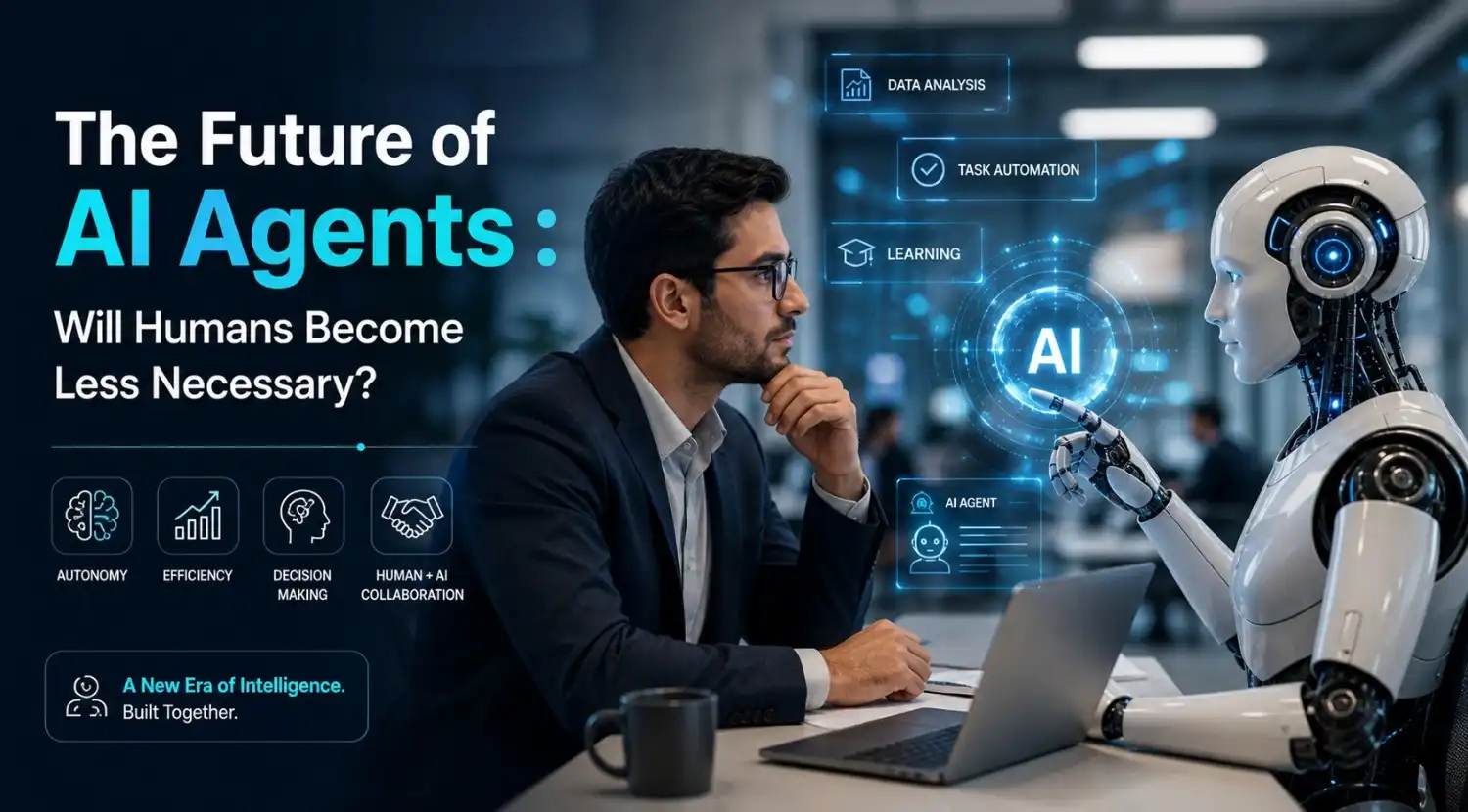
When most people hear the term “AI agent,” they still picture the robots of science fiction films. But the reality in 2025 is far more nuanced — and far more immediate. AI agents are software systems that can set their own goals, build step-by-step plans, and execute complex tasks with little to no human intervention.
Unlike the AI chatbots we grew familiar with — reactive systems that simply respond to prompts — today’s agents are proactive. They browse the internet, send emails, write and test code, manage files, book appointments, and chain hundreds of micro-decisions together to complete a larger goal. Tools like OpenAI’s Operator, Google’s Gemini agents, and open-source frameworks like AutoGen and CrewAI have moved agentic AI from research labs into everyday enterprise workflows.
What exactly is an AI agent?
A traditional AI model (like an early version of ChatGPT) waits for your input and gives a response. An AI agent, by contrast, receives a high-level objective and figures out how to achieve it — breaking it down into tasks, using tools, checking its own work, and iterating until the goal is met. Think of it as the difference between a calculator and a financial analyst.
What are AI agents actually doing today?
Across industries, AI agents have already embedded themselves into core workflows. Here are real-world examples from 2025:
Will humans actually become less necessary?
This is the question everyone is asking — and the honest answer is: it depends on the type of work. AI agents will automate a significant slice of today’s jobs, but they will simultaneously create new roles that didn’t exist before. The picture is more of a transformation than a disappearance.
What the World Economic Forum says
The WEF’s 2025 Future of Jobs Report projects that automation could displace 85 million jobs globally by 2030 — but it also forecasts the creation of 97 million new roles. The net balance is positive, but the transition will be deeply uneven. Workers in routine-task-heavy roles will feel the pressure first; those who can collaborate with AI will see their leverage rise significantly.
The leading AI agent frameworks in 2025
For developers and technically curious readers, these are the tools driving the agentic AI movement right now:
Humans and AI: collaboration, not competition
The most important reframe for 2025 is this: AI agents are not your competition — they are leverage. Just as the spreadsheet didn’t replace accountants but made them dramatically more powerful, AI agents amplify what humans can accomplish rather than simply substituting for human labor.
The people who will thrive are not those who fear AI, nor those who blindly trust it — but those who learn to work alongside it. Understanding what agents can and cannot do, knowing when to intervene, and bringing judgment, ethics, and creativity to problems that AI cannot fully solve: these are the skills that will define professional value in the years ahead.
Conclusion
AI agents are reshaping the nature of work in 2025 — that much is certain. But “humans becoming less necessary” is the wrong framing. What’s actually happening is that the definition of necessary is changing. Mundane, process-driven work will increasingly belong to agents. Strategic, empathetic, and creative work will remain human territory. The best career move you can make right now? Learn one AI tool deeply, find its real-world application in your field, and start building the skills that sit above what automation can do.